


Hey there! As a supplier of automatic beveling machines, I often get asked if these machines can handle materials with different compositions. Well, let's dive right into it and find out.
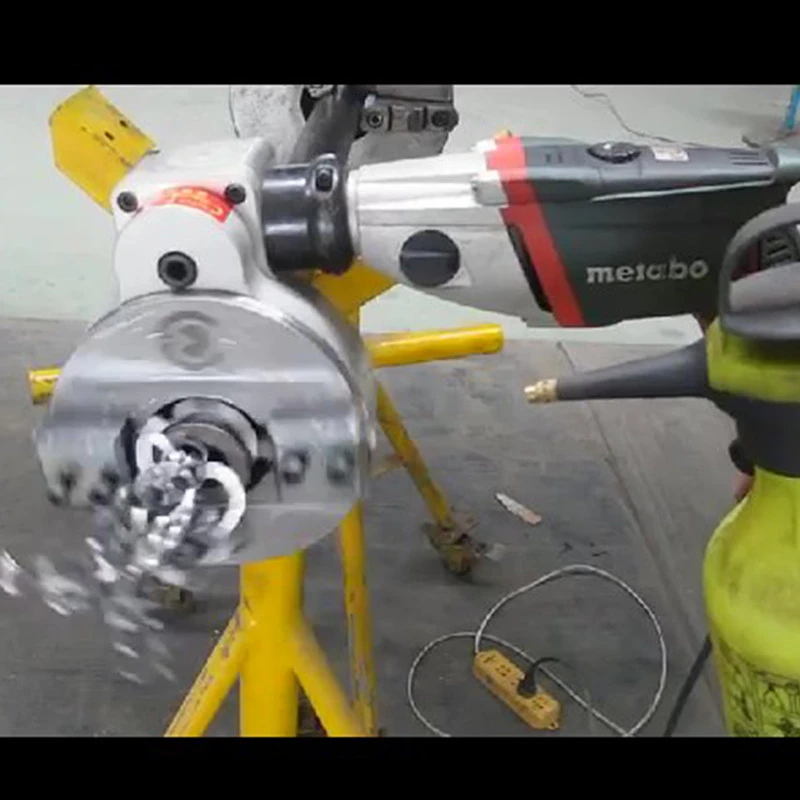

First off, let's understand what an automatic beveling machine is. It's a nifty piece of equipment designed to create a beveled edge on various materials. This beveling process is crucial in many industries, like construction, manufacturing, and plumbing, as it helps in joining materials together more effectively and improving the overall strength of the joint.
Now, when it comes to different material compositions, we're talking about a wide range of stuff. You've got metals like steel, aluminum, and copper, non - metals such as plastics and composites, and even some exotic materials used in high - tech industries.
Let's start with metals. Steel is one of the most commonly beveled materials. It's strong, durable, and widely used in construction and manufacturing. Most automatic beveling machines are well - equipped to handle steel. The cutting tools on these machines are made from high - quality materials like carbide, which can easily cut through the tough steel surface. Whether it's mild steel, stainless steel, or alloy steel, an automatic beveling machine can adjust its cutting parameters to get the job done. For example, if you're using a SCB - 114 Self - centering Pipe Cutting and Beveling Machine, it has the flexibility to be adjusted for different types of steel. You can change the speed of the cutting blade, the depth of the cut, and the feed rate according to the specific properties of the steel you're working with.
Aluminum is another metal that's frequently beveled. It's lightweight and corrosion - resistant, making it popular in the aerospace and automotive industries. Beveling aluminum is a bit different from steel. Aluminum is softer, so the cutting tools need to be adjusted to prevent the material from getting clogged in the blade. Automatic beveling machines can be set up to use a higher cutting speed and a lighter feed rate when working with aluminum. The SCB - 63 Self - centering Pipe Cutting and Beveling Machine is a great option for beveling aluminum pipes. It can provide a smooth and precise bevel, which is essential for high - quality joints in aluminum structures.
Copper is also used in many applications, especially in electrical and plumbing systems. Beveling copper requires a delicate touch because it's a relatively soft metal. Automatic beveling machines can be programmed to use a slow cutting speed and a fine - toothed blade to avoid damaging the copper surface. The machine's control system can ensure that the bevel is clean and accurate, which is important for proper electrical conductivity and leak - free plumbing connections.
Moving on to non - metals, plastics are widely used in various industries. There are different types of plastics, such as PVC, ABS, and polycarbonate. Each type has its own unique properties, but most automatic beveling machines can handle them. When beveling plastics, the cutting tools need to be sharp to prevent melting or chipping of the material. The machine can be adjusted to use a lower cutting speed and a higher feed rate to get a clean bevel. Some machines even have special cooling systems to keep the plastic from overheating during the beveling process.
Composites are a bit more challenging. Composites are made up of two or more different materials, like carbon fiber and resin. The composition of composites can vary greatly, which means the beveling process needs to be carefully tailored. Automatic beveling machines can use different cutting strategies depending on the type of composite. For example, some composites may require a water - jet cutting attachment to prevent delamination of the layers. The machine's software can be programmed to adjust the cutting parameters in real - time based on the feedback from sensors that detect the properties of the composite material.
However, it's important to note that not all automatic beveling machines are created equal. Some machines are more versatile than others and can handle a wider range of material compositions. When choosing an automatic beveling machine, you need to consider the types of materials you'll be working with most often. If you work with a variety of materials, you'll want a machine that has a high degree of adjustability and flexibility.
In addition to the machine's capabilities, the operator also plays a crucial role. A skilled operator can make the most of the machine's features and adjust the settings to achieve the best results. They need to understand the properties of the materials and how to optimize the beveling process. Training and experience are key factors in getting the most out of an automatic beveling machine.
To sum it up, yes, an automatic beveling machine can be used for beveling materials with different compositions. But it requires the right machine, proper adjustment of cutting parameters, and a skilled operator. Whether you're beveling steel pipes for a construction project, aluminum components for an aerospace application, or plastic parts for a consumer product, there's an automatic beveling machine out there that can meet your needs.
If you're in the market for an automatic beveling machine and want to discuss your specific requirements, feel free to reach out. We're here to help you find the perfect solution for your beveling needs.
References
- Industrial Machinery Handbook
- Metalworking Technology Manual
- Plastic and Composite Manufacturing Guides


