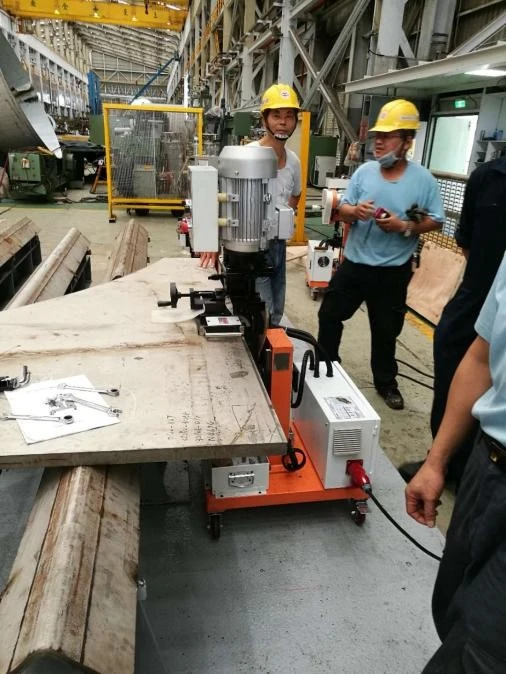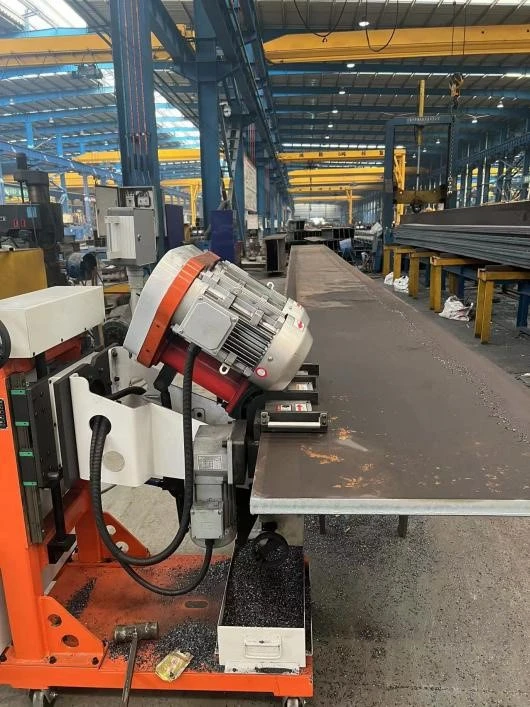
Beveling machines are widely used in steel structure fabrication for weld edge preparation. They help prepare steel plates and structural components before welding, providing consistent bevel angles and cleaner edges for better fit-up and welding.
Steel Plate Beveling
Steel structure projects often use thick and large steel plates. A Steel Plate Beveling Machine can machine long plate edges with consistent bevel angles and dimensions.
Compared with manual grinding, mechanical beveling provides more consistent edge preparation and can reduce manual finishing work.
Weld Preparation
Before welding, steel plates and structural components may require V, X, Y, or K bevels depending on the joint design and welding process.
A Beveling Machine helps create a controlled and repeatable weld groove, supporting better fit-up and more stable welding operations.
Applications in Steel Structure Fabrication
Beveling machines can be used in different stages of steel structure fabrication.
Typical Applications :
- Steel plates
- H-beams and structural sections
- Box columns
- Steel frames
- Bridge components
- Industrial platforms
- Large welded components
For long and large steel components, consistent edge preparation can help improve production efficiency and reduce repeated grinding and rework.
Why Use a Beveling Machine?
Consistent Bevel Quality
Mechanical beveling helps maintain a consistent bevel angle and edge geometry along the workpiece.
01
Faster Edge Preparation
For long steel plate edges and repeated production, a beveling machine can be more efficient than manual grinding.
02
Better Weld Preparation
Clean and consistent bevels provide a better starting point for fit-up and welding.
03
Reduce Manual Grinding
Machined beveling can reduce dependence on manual grinding, particularly when processing thick plates and long edges.
04
Beveling Solutions for Steel Fabrication
Whether you process structural steel plates, beams, columns, or large welded components, the right beveling machine should be selected according to material type, plate thickness, bevel angle, groove type, edge length, and production requirements.