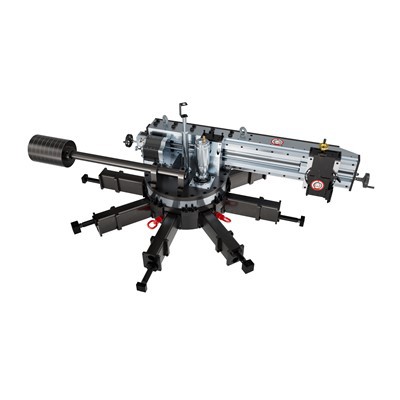
As a supplier of automatic beveling machines, I understand the importance of achieving high-quality beveling results. The quality of beveling not only affects the appearance of the workpiece but also has a significant impact on the subsequent welding and assembly processes. In this blog, I will share some insights on how to improve the beveling quality of an automatic beveling machine through parameter adjustment.
Understanding the Key Parameters
Before delving into parameter adjustment, it is essential to understand the key parameters that affect the beveling quality of an automatic beveling machine. These parameters include cutting speed, feed rate, cutting depth, and tool angle. Each parameter plays a crucial role in determining the quality of the bevel, and adjusting them correctly can significantly improve the overall beveling performance.
Cutting Speed
Cutting speed refers to the linear speed at which the cutting tool moves relative to the workpiece. It is one of the most critical parameters in beveling, as it directly affects the cutting force, tool life, and surface finish of the bevel. A too-high cutting speed can lead to excessive tool wear, poor surface finish, and even damage to the cutting tool. On the other hand, a too-low cutting speed can result in inefficient cutting and longer processing times.

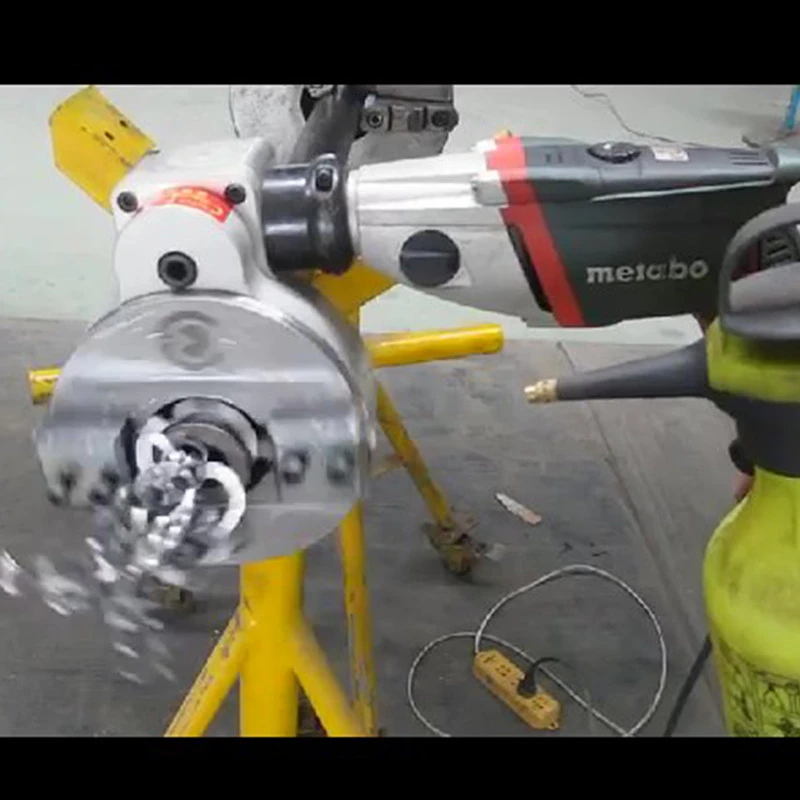
To determine the optimal cutting speed, several factors need to be considered, such as the material of the workpiece, the type of cutting tool, and the desired surface finish. Generally, harder materials require lower cutting speeds, while softer materials can tolerate higher cutting speeds. It is also important to refer to the manufacturer's recommendations for the specific cutting tool being used.
Feed Rate
The feed rate is the speed at which the cutting tool advances into the workpiece during the beveling process. It is closely related to the cutting speed and affects the chip thickness and the quality of the bevel surface. A too-high feed rate can cause rough surfaces, chipping, and uneven bevels, while a too-low feed rate can lead to slow processing and excessive heat generation.
The optimal feed rate depends on the cutting speed, the material of the workpiece, and the cutting tool geometry. In general, a higher cutting speed allows for a higher feed rate, but it is crucial to maintain a balance to ensure a smooth and high-quality bevel. Experimentation and adjustment may be necessary to find the ideal feed rate for a particular application.
Cutting Depth
Cutting depth refers to the distance that the cutting tool penetrates into the workpiece during each pass. It affects the cutting force, tool life, and the overall efficiency of the beveling process. A too-large cutting depth can increase the cutting force, leading to tool breakage and poor surface finish. Conversely, a too-small cutting depth can result in multiple passes and longer processing times.
The appropriate cutting depth depends on the material of the workpiece, the cutting tool's strength, and the desired bevel angle. It is recommended to start with a relatively small cutting depth and gradually increase it if necessary, while monitoring the cutting performance and the quality of the bevel.
Tool Angle
The tool angle is the angle between the cutting edge of the tool and the workpiece surface. It plays a crucial role in determining the cutting force, chip formation, and the quality of the bevel. Different tool angles are suitable for different materials and beveling requirements. For example, a larger tool angle is often used for softer materials to reduce the cutting force, while a smaller tool angle is preferred for harder materials to improve the cutting efficiency.
The choice of tool angle also depends on the type of bevel being produced, such as a single bevel or a double bevel. It is important to select the appropriate tool angle based on the specific application and to ensure that the cutting tool is properly installed and aligned.
Parameter Adjustment Process
Once the key parameters have been identified, the next step is to adjust them to optimize the beveling quality. The following is a general process for parameter adjustment:
Step 1: Initial Setup
Before making any adjustments, ensure that the automatic beveling machine is properly installed, calibrated, and maintained. Check the cutting tool for any signs of wear or damage and replace it if necessary. Also, make sure that the workpiece is securely clamped and aligned to prevent any movement during the beveling process.
Step 2: Baseline Testing
Start by running a baseline test using the default or previously established parameter settings. This will provide a reference point for evaluating the effects of parameter adjustments. During the test, carefully observe the cutting performance, the quality of the bevel, and any signs of abnormal behavior, such as excessive vibration or noise.
Step 3: Parameter Adjustment
Based on the results of the baseline test, make small adjustments to one parameter at a time. For example, if the surface finish of the bevel is rough, you may try reducing the cutting speed or the feed rate. After each adjustment, run another test to evaluate the changes in the beveling quality. Repeat this process until the desired beveling quality is achieved.
It is important to note that parameter adjustments are often interdependent, and changing one parameter may affect the optimal settings of others. Therefore, it is necessary to make adjustments gradually and to monitor the overall cutting performance and beveling quality throughout the process.
Step 4: Documentation
Keep a detailed record of the parameter settings and the corresponding beveling quality results. This documentation will be useful for future reference and for troubleshooting any issues that may arise. It can also help in establishing a standard operating procedure for consistent beveling quality.
Case Studies
To illustrate the effectiveness of parameter adjustment in improving beveling quality, let's look at two case studies involving our SCB-114 Self-centering Pipe Cutting and Beveling Machine and SCB-63 Self-centering Pipe Cutting and Beveling Machine.
Case Study 1: SCB-114 Self-centering Pipe Cutting and Beveling Machine
A customer was using the SCB-114 machine to bevel stainless steel pipes for a high-precision welding application. Initially, the beveling quality was not satisfactory, with rough surfaces and inconsistent bevel angles. After a thorough analysis, we determined that the cutting speed was too high and the feed rate was too low.
We adjusted the cutting speed from 120 m/min to 80 m/min and increased the feed rate from 0.1 mm/r to 0.2 mm/r. After these adjustments, the surface finish of the bevel significantly improved, and the bevel angles became more consistent. The customer was very satisfied with the results and reported a significant reduction in welding defects and an increase in overall productivity.
Case Study 2: SCB-63 Self-centering Pipe Cutting and Beveling Machine
Another customer was using the SCB-63 machine to bevel carbon steel pipes. They were experiencing problems with excessive tool wear and poor bevel quality. Upon inspection, we found that the cutting depth was too large and the tool angle was not suitable for the material.
We reduced the cutting depth from 3 mm to 2 mm and changed the tool angle from 30° to 25°. These adjustments resulted in a significant reduction in tool wear and an improvement in the bevel quality. The customer was able to achieve a smoother surface finish and more accurate bevel angles, which ultimately led to a better welding quality and cost savings.
Conclusion
Improving the beveling quality of an automatic beveling machine through parameter adjustment is a systematic process that requires a thorough understanding of the key parameters and their interactions. By carefully adjusting the cutting speed, feed rate, cutting depth, and tool angle, it is possible to achieve high-quality bevels with smooth surfaces, accurate angles, and minimal defects.
As a supplier of automatic beveling machines, we are committed to providing our customers with the best possible solutions and support. If you are interested in learning more about our products or need assistance with parameter adjustment to improve your beveling quality, please do not hesitate to contact us for a procurement discussion. We look forward to working with you to achieve your beveling goals.
References
- "Machining Handbook," Industrial Press Inc.
- "Cutting Tool Engineering," Society of Manufacturing Engineers.
- Manufacturer's manuals for SCB-114 and SCB-63 Self-centering Pipe Cutting and Beveling Machines.