


Hey there! As a supplier of stationary pipe cutting beveling machines, I often get asked about the cutting force of these nifty pieces of equipment. So, let's dive right in and break it down.
First off, what exactly is cutting force? Well, in simple terms, it's the amount of force needed to cut through a material, in this case, pipes. When it comes to stationary pipe cutting beveling machines, the cutting force is crucial because it determines how efficiently and effectively the machine can cut and bevel pipes of different sizes and materials.
The cutting force of a stationary pipe cutting beveling machine depends on several factors. One of the most important ones is the type of cutting tool being used. Different cutting tools, such as saw blades or milling cutters, have different cutting forces. For example, a high - speed steel saw blade might have a different cutting force compared to a carbide - tipped milling cutter. The material of the cutting tool also plays a role. Carbide tools are generally harder and can generate more cutting force, which means they can cut through tougher materials like stainless steel pipes more easily.
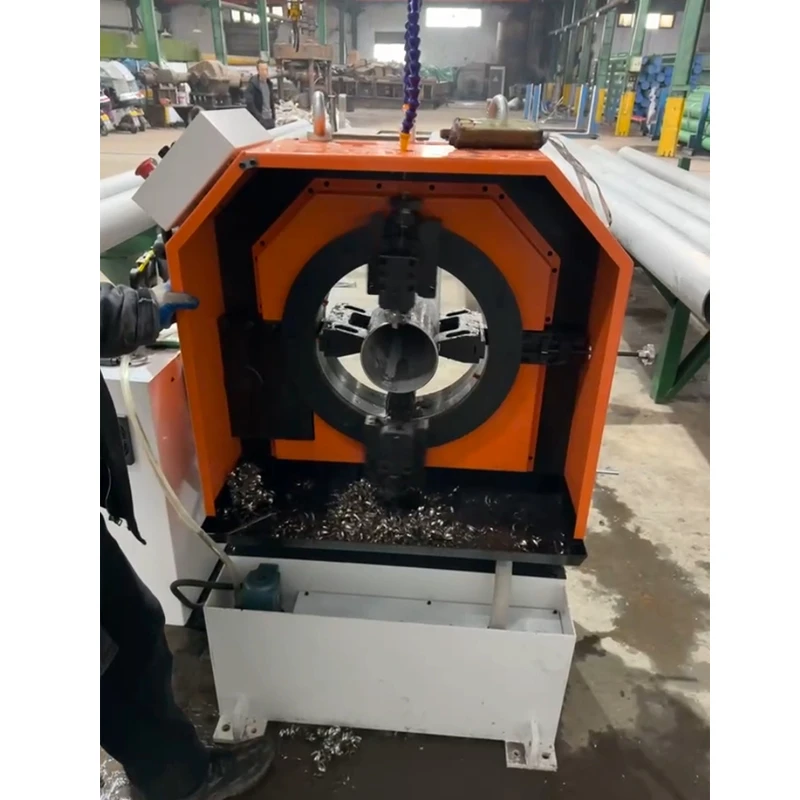
Another factor that affects the cutting force is the size of the pipe. Larger pipes usually require more cutting force because there's more material to cut through. A small - diameter pipe, say a 2 - inch pipe, won't need as much force as a 12 - inch pipe. Our TCM - 325 Desktop Pipe Cutting and Beveling Machine is great for smaller pipes. It's designed to handle pipes with a certain range of diameters, and the cutting force is optimized for that size range. If you try to cut a much larger pipe with it, you might find that the machine struggles because it doesn't have enough cutting force.
The material of the pipe is also a key factor. Pipes can be made from various materials like carbon steel, stainless steel, and aluminum. Each material has different hardness and toughness properties. Stainless steel is much harder than aluminum, so cutting through a stainless - steel pipe will require more cutting force. Our TCM - 630 Desktop Pipe Cutting and Beveling Machine is built to handle tougher materials. It has a more powerful motor and a cutting mechanism that can generate enough force to cut through thick - walled stainless - steel pipes.
The speed at which the cutting tool rotates also affects the cutting force. Generally, a higher rotational speed can increase the cutting force, but it also has its limits. If the speed is too high, it can cause the cutting tool to wear out quickly or even break. That's why most stationary pipe cutting beveling machines have adjustable speed settings. You can set the speed according to the pipe material and size. For instance, when cutting a thin - walled aluminum pipe, you can use a higher speed, but for a thick - walled carbon - steel pipe, a lower speed might be more appropriate to ensure a clean cut and avoid excessive wear on the cutting tool.
Let's talk about how we measure the cutting force. In the industry, cutting force is usually measured in newtons (N) or pounds - force (lbf). Manufacturers of stationary pipe cutting beveling machines conduct tests to determine the cutting force of their machines. They use specialized equipment to measure the force exerted by the cutting tool during the cutting process. These tests are done under controlled conditions, with specific pipe materials and sizes, to provide accurate information about the machine's cutting capabilities.
Now, why is it important to know the cutting force of a stationary pipe cutting beveling machine? Well, if you're in the market for one of these machines, understanding the cutting force can help you choose the right one for your needs. If you work with large - diameter, thick - walled pipes made of tough materials, you'll need a machine with a high cutting force. On the other hand, if you mainly deal with small - diameter, thin - walled pipes, a machine with a lower cutting force might be sufficient.
Our TCM - 426 Desktop Pipe Cutting and Beveling Machine is a great all - rounder. It has a good balance of cutting force, which makes it suitable for a wide range of pipe sizes and materials. Whether you're working on a small plumbing project or a larger industrial job, this machine can get the job done.
As a supplier, we make sure that our machines are designed to provide the right amount of cutting force for different applications. We use high - quality materials and advanced manufacturing techniques to ensure that our machines are reliable and efficient. Our team of experts is always available to help you choose the right machine based on your specific requirements.

If you're in the market for a stationary pipe cutting beveling machine, don't hesitate to reach out. We can provide you with detailed information about the cutting force and other features of our machines. We're here to help you make an informed decision and get the best machine for your business. Whether you're a small contractor or a large industrial company, we've got the right solution for you.
In conclusion, the cutting force of a stationary pipe cutting beveling machine is a complex but important factor. It's affected by the cutting tool, pipe size, pipe material, and cutting speed. By understanding these factors, you can choose the right machine for your needs. If you have any questions or want to discuss your requirements further, feel free to get in touch. We're looking forward to helping you with your pipe - cutting and beveling needs.
References:
- Industrial Machinery Handbook
- Pipe Cutting and Beveling Technology Journal


