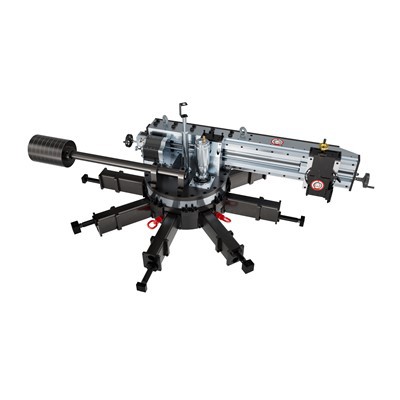
As a supplier of stationary pipe cutting beveling machines, I've witnessed firsthand the importance of repeatability in the cutting and beveling process. Repeatability refers to the ability of a machine to produce consistent results over multiple operations. In the context of stationary pipe cutting beveling machines, it means that the machine can cut and bevel pipes with the same precision, angle, and quality time after time.
The Significance of Repeatability
Repeatability is crucial in industries where precision and consistency are paramount. For example, in the oil and gas industry, pipes need to be cut and beveled with high accuracy to ensure proper welding and connection. Any deviation in the cutting or beveling process can lead to leaks, structural failures, and costly repairs. Similarly, in the construction and manufacturing sectors, repeatable pipe cutting and beveling are essential for maintaining the quality and integrity of the final products.
Factors Affecting Repeatability
Several factors can influence the repeatability of a stationary pipe cutting beveling machine. Understanding these factors is key to ensuring consistent performance.
Machine Design and Build Quality
The design and build quality of the machine play a significant role in its repeatability. A well - designed machine with high - quality components is more likely to maintain its accuracy over time. For instance, a sturdy frame can minimize vibrations during the cutting and beveling process, which in turn reduces the chances of errors. Our TCM - 325 Desktop Pipe Cutting and Beveling Machine is engineered with a robust frame and precision components to ensure excellent repeatability.
Tooling and Blade Quality
The quality of the cutting tools and blades is another critical factor. Dull or low - quality blades can cause inconsistent cuts and bevels. High - quality blades are designed to maintain their sharpness and cutting edge for longer periods, resulting in more repeatable results. We recommend using the appropriate blades for different pipe materials and thicknesses to optimize repeatability.
Control Systems
Modern stationary pipe cutting beveling machines are often equipped with advanced control systems. These systems allow operators to set precise parameters for cutting speed, bevel angle, and feed rate. A reliable control system ensures that the machine follows the programmed instructions accurately, leading to consistent results. Our TCM - 630 Desktop Pipe Cutting and Beveling Machine features a state - of - the - art control system that enhances repeatability by providing precise control over the cutting and beveling process.
Operator Skill and Training
Even the most advanced machine requires a skilled operator to achieve optimal repeatability. Proper training on machine operation, tooling selection, and maintenance is essential. An experienced operator can identify and address potential issues before they affect the quality of the cuts and bevels. We offer comprehensive training programs to our customers to ensure that their operators can make the most of our machines and achieve high levels of repeatability.
Measuring Repeatability
To assess the repeatability of a stationary pipe cutting beveling machine, several methods can be used. One common approach is to measure the dimensional accuracy of the cut and beveled pipes over a series of operations. This can be done using precision measuring tools such as calipers, micrometers, and angle gauges. By comparing the measurements of multiple pipes, operators can determine the consistency of the machine's performance.
Another method is to use statistical process control (SPC) techniques. SPC involves collecting and analyzing data from the cutting and beveling process to identify trends and variations. By monitoring key process parameters such as cutting speed, feed rate, and bevel angle, operators can detect any deviations from the desired values and take corrective actions in a timely manner.
Ensuring Repeatability in Practice
To ensure repeatability in the daily operation of a stationary pipe cutting beveling machine, the following practices are recommended:
Regular Maintenance
Regular maintenance is essential to keep the machine in optimal condition. This includes cleaning, lubricating, and inspecting the machine components, as well as replacing worn - out parts. By following a strict maintenance schedule, operators can prevent issues such as misalignment, excessive wear, and tooling failure, which can all affect repeatability.
Quality Control Checks
Implementing a comprehensive quality control system is crucial. This involves conducting in - process inspections to verify the accuracy of the cuts and bevels at various stages of production. By catching any issues early, operators can make adjustments to the machine settings or tooling to ensure that the final products meet the required specifications.
Calibration
Periodic calibration of the machine is necessary to maintain its accuracy. Calibration involves adjusting the machine's sensors, controls, and cutting tools to ensure that they are operating within the specified tolerances. Our TCM - 426 Desktop Pipe Cutting and Beveling Machine is designed to be easily calibrated, allowing operators to quickly restore its precision when needed.


Conclusion
In conclusion, repeatability is a vital characteristic of a stationary pipe cutting beveling machine. It ensures that pipes are cut and beveled with consistent precision, which is essential for the quality and reliability of the final products. By understanding the factors that affect repeatability, implementing proper measurement and control methods, and following best practices in maintenance and quality control, operators can achieve high levels of repeatability with our machines.
If you are in the market for a stationary pipe cutting beveling machine that offers excellent repeatability, we invite you to contact us for a detailed discussion. Our team of experts is ready to assist you in selecting the right machine for your specific needs and providing you with the support you need to achieve optimal results.
References
- "Pipe Cutting and Beveling Technology" - Industry Research Report
- "Precision Machining Handbook" - A comprehensive guide on machining processes and quality control